
I’ve been asked this question more times than I can count. In boardrooms, on leadership programmes, over coffee with senior managers wondering whether to invest in their people or simply find someone “naturally gifted” instead.
My answer has never changed. And the evidence behind it is overwhelming.
Leaders are made. Every time.
The Army Experiment
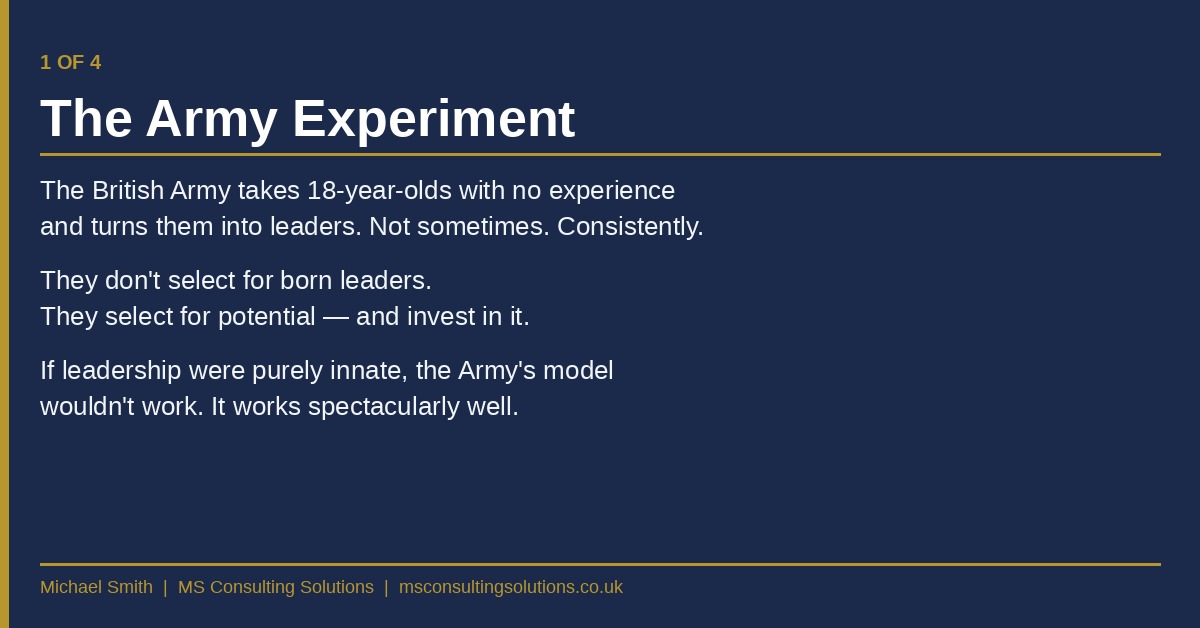
The British Army takes 18-year-olds — young people with no corporate experience, no formal leadership training, no prior track record of managing teams — and turns them into leaders. Not sometimes. Consistently. At scale. For generations.
They don’t select for born leaders. They select for potential, and then they invest in it.
That didn’t happen by accident. It happened by design — through sustained coaching, clear standards, psychological safety to fail and learn, and a culture where leadership development is everyone’s business, not just HR’s.
If leadership were purely innate, the Army’s model wouldn’t work. It works spectacularly well.
The Born Leader Myth
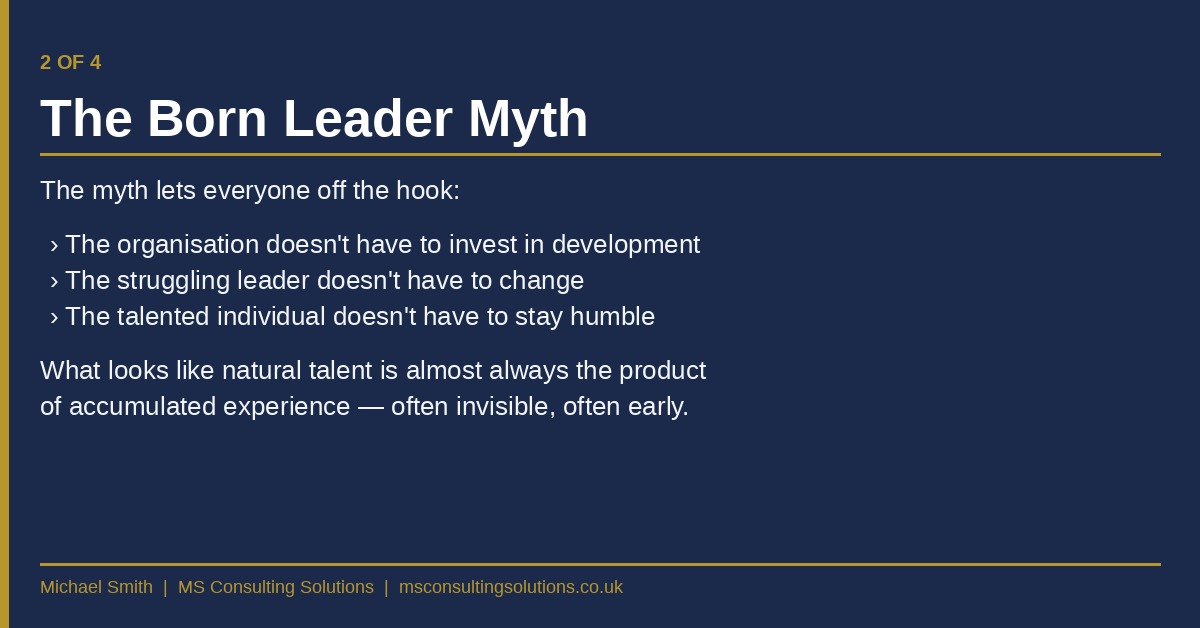
The myth is seductive precisely because it lets everyone off the hook.
- The organisation doesn’t have to invest in development programmes.
- The struggling leader doesn’t have to change — they just weren’t born to lead.
- The talented individual doesn’t have to stay humble — they arrived this way.
It’s a convenient story. It’s just not a true one.
What looks like natural leadership talent is almost always the product of accumulated experience — often invisible, often early. The person who “just seems to have it” often grew up in a household where responsibility was given early, where communication was modelled at a high level, where failure was safe. They had a head start. Not a different wiring.
“The only thing innate about great leadership is the potential to develop it.”
What Great Organisations Actually Do
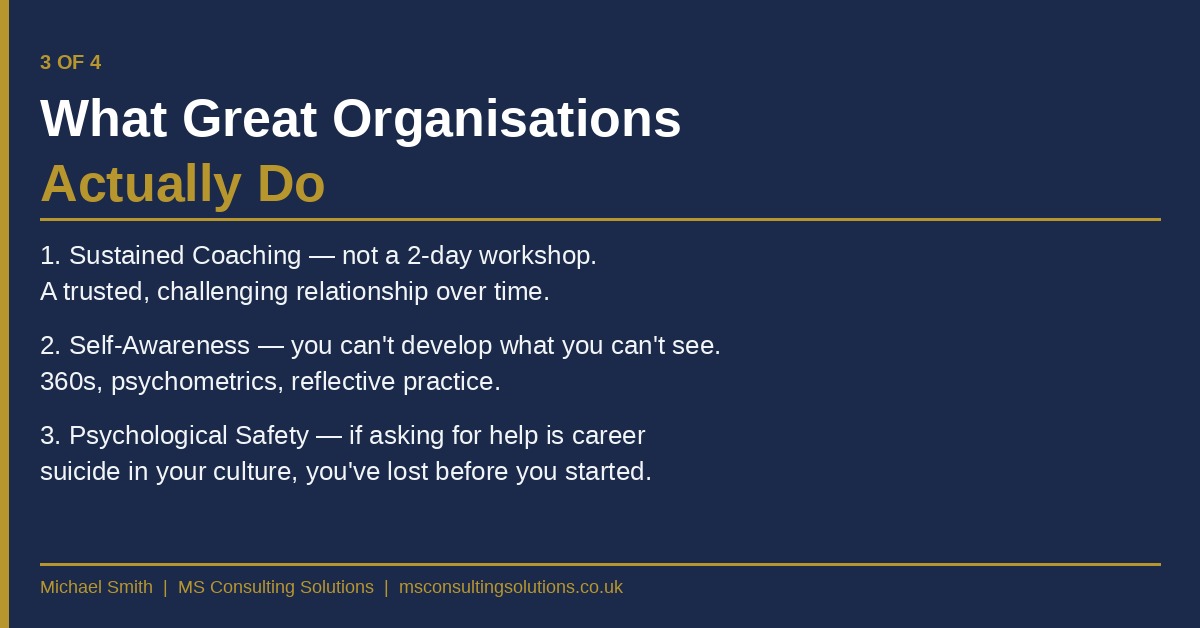
In my work with leaders across sectors, three things consistently separate the organisations that grow great leaders from those that don’t:
1. Sustained Coaching
Not a 2-day workshop. Not a competency framework gathering dust on the intranet. A sustained, trusted, challenging relationship over time. Someone who sees you, challenges your blind spots, and cares enough to tell you the truth.
2. Self-Awareness as a Foundation
You can’t develop what you can’t see. The best leadership programmes invest heavily in helping people understand themselves — how they show up under pressure, how others experience them, where their patterns come from. 360s, psychometrics, reflective practice. These aren’t soft. They’re the foundation everything else is built on.
3. Psychological Safety to Struggle
If admitting vulnerability or asking for help is career suicide in your culture, you’ve lost before you started. The leaders I’ve seen grow the most are those who were allowed to be uncertain, to make mistakes in a supported environment, and to genuinely reflect rather than perform confidence they didn’t feel.
The Bottom Line
The talent is already in your building. The question isn’t whether leaders are born or made. The question is whether your organisation is willing to make them — and whether you’re investing accordingly.
The Army isn’t unique. It’s just committed.
Your best leaders might not be the most confident people in the room right now. They might be the ones waiting for someone to believe in them.
“Stop looking for born leaders. Start building them.”
Michael Smith is the Founder of MS Consulting Solutions and a leadership development specialist. He works with organisations to build high-performing teams and develop leaders at every level. Read the original article on LinkedIn or get in touch to discuss how we can help your organisation.